As retailers gather in Singapore for next week, a shift is unfolding beneath the surface of retail technology conversations. The industry is no longer merely talking about digital transformation or omnichannel experiences. Instead, it is entering an era where AI agents, machine-driven discovery, invisible payments and behavioural identity systems are redefining what commerce itself means.
For retailers across APAC, the stakes are growing rapidly. The customer journey is evolving from a series of human-triggered actions into a fluid, intelligent and increasingly autonomous ecosystem powered by GenAI, agentic systems and unified commerce infrastructure.
According to Adyen, this shift is fundamentally changing how brands engage customers, structure their technology stacks and maintain trust in an AI-mediated retail environment.
Ben Wong, Adyen’s general manager for Southeast Asia and Hong Kong, believes the next wave of retail innovation will move beyond reactive personalisation into predictive and anticipatory engagement.
“AI acts as a decision support layer that filters complexity and proactively surfaces relevant products, shortening the path to purchase,” Wong said.

IMAGE: Adyen
From search to autonomous commerce
Traditional e-commerce was largely built around search boxes, product catalogues and click-based navigation. But agentic AI is changing the mechanics of discovery itself.
Instead of consumers manually browsing products, AI systems are beginning to operate as persistent shopping assistants that remember preferences, monitor intent signals and potentially transact on behalf of users. Conversational interfaces such as OpenAI’s ChatGPT and Google Gemini are accelerating this transition towards what the industry increasingly calls agentic commerce.
In this emerging model, commerce becomes stateful rather than session based. AI agents maintain contextual understanding over days or even weeks, surfacing recommendations before consumers explicitly articulate their needs.
Yet Wong cautions that the industry remains in the early stages of this transformation.
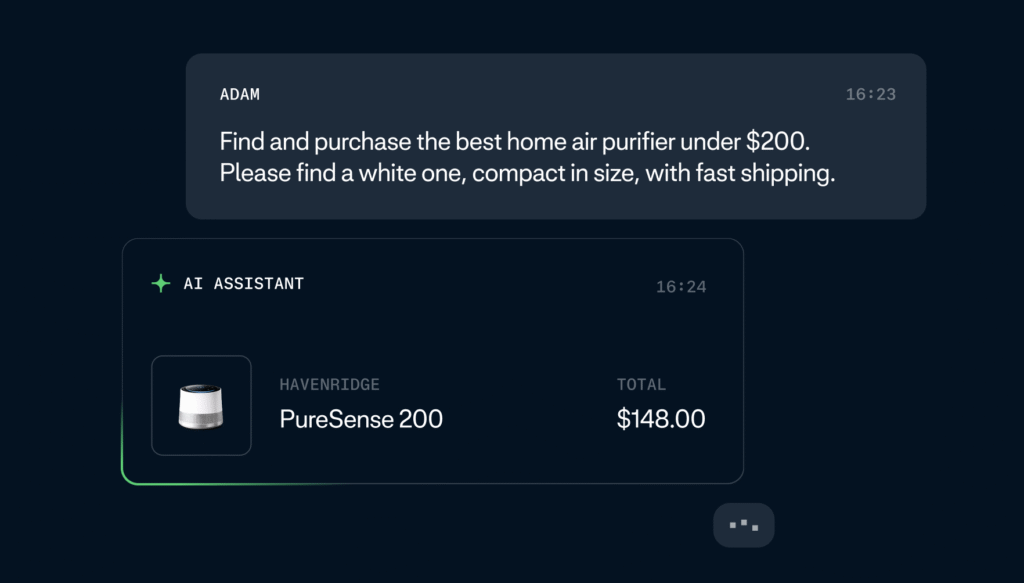
“We are currently transitioning from simple AI discovery to “human-in-the-loop” purchasing where shoppers not only discover products in chat but can also complete the transaction within the same interface,” he explained.
The implications for retailers are enormous. Discovery, recommendation and checkout are no longer isolated stages. Instead, AI systems are collapsing the funnel into a single conversational flow. This also creates new infrastructure challenges.
Legacy e-commerce systems were never designed for continuous AI-driven interactions requiring real-time recalculations of pricing, taxes, inventory and payment authentication. Fragmented AI protocols, inconsistent inventory systems and unclear liability frameworks for autonomous purchasing all threaten to slow adoption.

IMAGE: Adyen
The rise of the intelligent store
At the same time, the concept of the physical store is also undergoing reinvention.
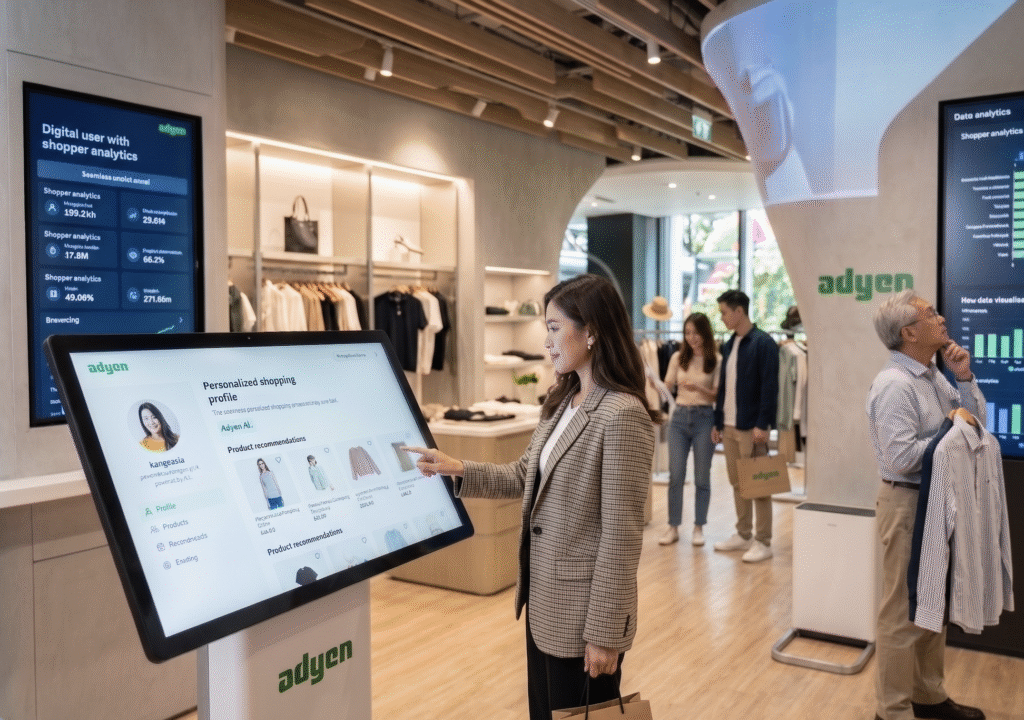
Retail stores are increasingly evolving into experiential environments designed to complement digital journeys rather than compete against them. In APAC markets such as Singapore, shoppers are demanding continuity between physical and digital interactions.
According to Adyen’s research, 46 per cent of Singapore consumers want seamless experiences across online and in-store channels, while 43 per cent expect real-time product visibility and faster, technology-enabled shopping experiences.
This shift is driving adoption of unified commerce architectures that merge online and offline payment systems into a single operational layer.
Unlike traditional omnichannel systems that often operate in silos, unified commerce creates a shared data environment where payment information, customer insights and inventory intelligence converge in real time.
The strategic value extends far beyond operational efficiency. Unified payment infrastructure allows retailers to understand customer behaviour across channels, identify repeat shoppers, localise payment preferences and build persistent customer identity layers that survive fragmented digital touchpoints.
As AI increasingly intermediates discovery, payment data may become one of the few remaining reliable signals connecting consumers back to brands.

IMAGES: Adyen
Towards invisible commerce
Perhaps the most transformative concept emerging in retail is the idea of “zero-friction commerce”. In this future, checkout itself effectively disappears.
Instead of manually entering credentials or authenticating transactions repeatedly, consumers move fluidly across platforms, devices and environments while payment systems invisibly follow them in the background. This continuity layer relies heavily on tokenisation and behavioural identity systems.
According to Wong, network tokenisation will become critical to maintaining persistent payment continuity even when underlying card details change because of expiration, replacement or fraud events.
The urgency is significant because payment friction remains highly damaging to customer trust.
Adyen’s research found that 59 per cent of Singapore shoppers say payment errors negatively affect brand perception, while one in five consumers abandon purchases entirely because of trust or security concerns.
Retailers as AI-driven media platforms
Another major transformation underway is the evolution of retailers into data-powered media ecosystems.
Historically, retailers monetised transactions. Increasingly, they are monetising shopper intelligence.
As AI systems gain control over product discovery and recommendation flows, structured product data becomes a competitive weapon. Retailers that maintain accurate, machine-readable pricing, inventory and product metadata will be more likely to surface prominently within AI-driven discovery environments.
In effect, product feeds become the new advertising inventory. This is particularly important in APAC where mobile-first consumers are rapidly embracing digital engagement models. Adyen noted that 27 per cent of Singapore shoppers already use brand apps to obtain richer product information before purchasing.
The implications extend beyond marketing. Retailers are increasingly behaving like media networks, using cross-channel payment and behavioural data to shape discovery, optimise engagement and maintain influence even when AI agents become the intermediary between consumers and brands.
The trust imperative in AI-powered retail
Yet, as retail becomes more predictive, autonomous and data-driven, trust becomes the defining challenge.
Hyper-personalisation depends on vast amounts of behavioural and transactional data. But consumers and regulators are simultaneously demanding stronger protections around privacy, consent and identity management.
Wong argues that the future of trusted commerce will depend on dynamic identity models built around behavioural signals rather than static credentials alone.
This means AI-powered retail systems must evolve from simply recognising users to continuously validating intent, consent and authenticity in real time. Critically, brands must avoid surrendering customer ownership to AI platforms themselves.
“Brands must ensure they own the customer data and relationship, without ever ceding control to AI platforms or middlemen,” Wong said.
Experience Adyen’s latest agentic commerce and payment innovations on the expo floor of NRF 2026 APAC on June 2-4 in Singapore at the Marina Bay Sands Expo and Convention Centre