
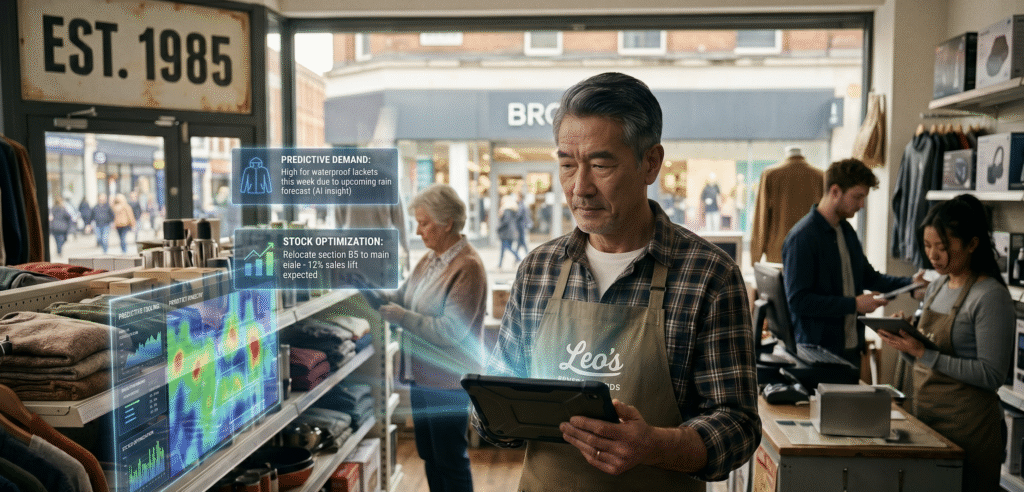
Physical retail isn’t dying. It’s being brutally sorted. As e-commerce commands 42 per cent of global sales in Asia alone, brick-and-mortar stores face a hard ultimatum: get smarter or get out.
If you have wandered down some Asian high streets, you would have experienced luxury brands jostling for attention in glitzy malls. But that is precisely the issue, and the most vulnerable are mid-market brands stuck in no-man’s land. Not cheap enough to beat discounters, not differentiated enough to command loyalty. For them, storefronts have quietly flipped from assets into liabilities.
Speaking with Deeptech Times on the sidelines of NRF 2026: Retail’s Big Show Asia Pacific (NRF 2026 APAC), Christoph Schröder, global VP for industry business unit retail at SAP, thinks the high street is worth saving. But only through a rebuild from the data layer up. Here’s what that actually looks like.
H&M’s Soho experiment is the clearest proof point yet
After years of opening 300-400 new locations annually pre-COVID, H&M hit a wall. More stores weren’t moving the needle. So the company needed to try something different.
Working with SAP, an 18-year technology partner, H&M launched a “smart store” pilot in Soho, New York, with one core goal: drive higher revenue while keeping less inventory on the floor. Paradoxical? Yes. But logical? Definitely.
The tech stack: RFID tracking, AI-driven social listening and data from fitting rooms, specifically what gets tried on but not bought. The system reads real-time signals from TikTok and Instagram to inform buying decisions, so the racks reflect what people want this week, not what buyers predicted three months ago.
The result: a 4-6 per cent revenue uplift. In retail, that’s meaningful.
H&M’s win throws the core dysfunction of legacy retail into sharp relief: siloed data. Most traditional retailers run their online and offline channels as separate fiefdoms. E-commerce customer profiles never talk to point-of-sale systems. Inventory visibility is a patchwork.
The downstream effects are predictably bad: a loyal online customer walks into a store, and staff have no idea who they are. Items show as available online but are physically absent on shelves, or vice versa. Cross-channel returns become friction nightmares. Pricing goes inconsistent across regions.
“The core challenge is both cultural and technical,” Schröder notes. Retailers need to abandon channel-specific KPIs and build towards a single source of truth: unified customer data and real-time global inventory visibility. That mindset shift is harder than any technology deployment.
Nobody can afford a three-year tech overhaul anymore
The traditional fix for fragmented data was a multi-year ERP transformation. In practice, that meant 24-36 months of pain before anything improved, a timeline that’s become a corporate death sentence when competitors can move in quarters.
The new playbook is parallel modernisation: deploy AI on top of existing systems to solve discrete, high-value problems now, while backend infrastructure modernises in the background. H&M’s fitting room analytics project is a clean example, a targeted intervention that generates ROI without waiting for a complete data architecture rebuild.
The practical implication for operators: find the specific friction point with a measurable cost, build a tight AI application around it, and fund the bigger transformation with the savings.
Retailers expect a clear strategy to make physical stores a profitable asset by creating unique experiences that surprise and add value beyond transactions: expert advice, try-before-you-buy and excellent service.
“The aim is to shift from transactional to relationship-based models, keeping customers in the brand ecosystem,” Schröder asserts. Success is measured by increased foot traffic, loyalty and willingness to pay a premium for superior overall experience.
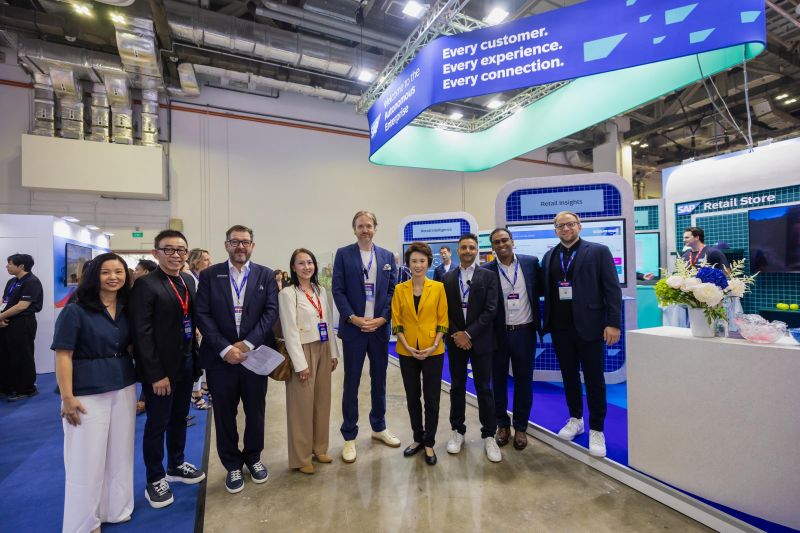
IMAGE: SAP
Two types of retailers will win. Everyone else is exposed.
Consumer behaviour data out of Europe shows a clear pattern: overall spending has climbed over the last decade, but discretionary fashion spend has declined. People are being more selective, but they’re not purely price-driven. Shoppers will consistently accept paying US$10 more when the experience, expertise and service justify it.
That’s pushing the market towards two surviving archetypes – ultra-efficient operators: high-throughput discount formats and streamlined grocery models; experience builders: brands like Decathlon that turn stores into ecosystems, not just checkout lines.
Look no further than Victoria’s Secret and Dollar General. Despite raising prices, Victoria’s Secret’s growth is being driven by the extremes: households making under US$50,000 and over US$200,000. Meanwhile, Dollar General is suddenly a hotspot for the affluent, seeing its biggest customer spike from households clearing US$100,000.
What’s next
SAP is already testing what’s next in Bordeaux: a smart store simulation using interactive AI avatars to guide shoppers through grocery, fashion and furniture layouts. It’s early but the direction is clear.
A well-instrumented store generates data, relationships and revenue that pure e-commerce can’t replicate. The brands deploying AI against specific problems, rather than waiting for a perfect system that never arrives, are the ones that will still have stores worth walking into.