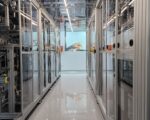
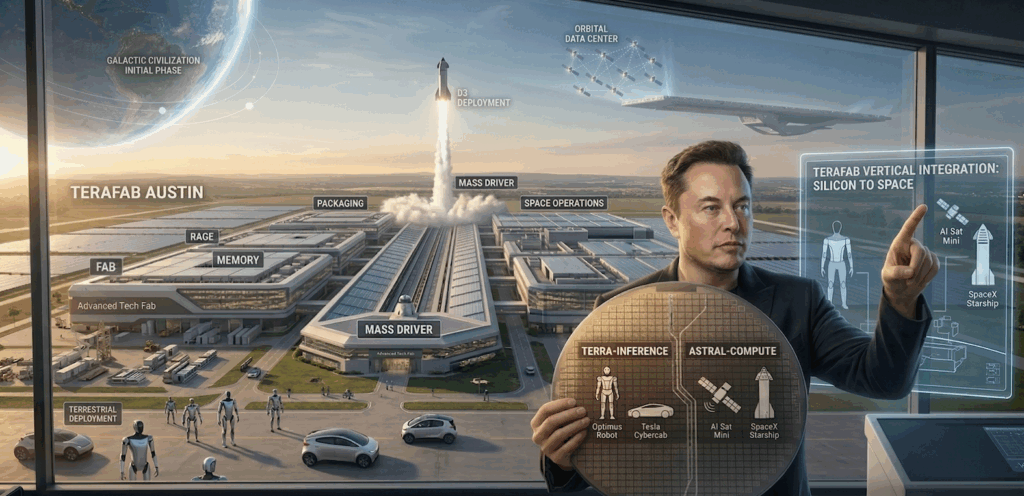
When Elon Musk unveiled Terafab, it was tempting to view it as yet another ambitious extension of his industrial playbook. A trillion-watt semiconductor factory that collapses chip design, fabrication and AI workloads into a single, vertically integrated system sounds less like a conventional manufacturing strategy and more like a provocation.
But that would be missing the broader signal.
Terafab is not simply about chips. It is an articulation, arguably the clearest yet, of where deep technology is heading: towards a tightly coupled convergence of AI, robotics and space infrastructure. In that sense, the announcement matters less for what it promises to build and more for what it reveals about the next phase of the global technology order.
From constraint to control
At its most immediate level, Terafab is a response to constraint. The exponential rise of AI has exposed a fundamental imbalance between demand for compute and the world’s ability to supply it. Semiconductor manufacturing, already one of the most complex industrial processes on Earth, is struggling to scale at the pace that modern AI systems require.
Musk’s answer is not to optimise the existing model, but to rethink it entirely: collapsing fragmented supply chains into a unified, software-defined production system that behaves more like a continuously evolving platform than a static factory. This approach echoes Tesla’s earlier disruption of automotive manufacturing, where vertical integration and software-centric design redefined how vehicles are built.
Yet the implications of Terafab extend far beyond any single industry. If successful, it represents a structural shift in how compute itself is produced, distributed and controlled.
Convergence as the new architecture
More importantly, Terafab signals a deeper convergence across domains that have historically evolved in parallel.
AI has largely been confined to data centres and cloud platforms. Robotics has advanced as a separate discipline, focused on physical automation. Space infrastructure, meanwhile, has remained a specialised frontier, detached from mainstream digital systems.
Terafab brings these worlds into alignment.
In Musk’s framing, the chips produced by Terafab do not simply power AI models in isolation. They underpin autonomous systems, from humanoid robots to self-driving vehicles, while simultaneously enabling the expansion of compute into orbit. The result is a closed-loop ecosystem in which intelligence is generated, deployed and scaled across both terrestrial and extraterrestrial environments.
This shift is significant. AI is no longer just software running in the cloud: it becomes embedded in machines, distributed across networks and increasingly integrated into physical and orbital infrastructure. Intelligence, in this context, begins to resemble a foundational layer of the economy rather than an application built on top of it.
The emergence of a compute-industrial complex
What emerges from this convergence is the early outline of a new industrial paradigm, one that could be described as a compute-industrial complex. In this model, control over compute capacity becomes a defining strategic advantage.
The companies that can design, manufacture and deploy their own silicon at scale will shape the trajectory of AI innovation.
That innovation, in turn, will determine the capabilities of robotics systems, which ultimately drive productivity and economic growth. Increasingly, the competitive landscape will be defined not by isolated breakthroughs, but by the ability to integrate these layers into a cohesive system.
This represents a shift away from the fragmented value chains that have historically characterised the semiconductor and technology industries, and towards a more consolidated, vertically integrated model.

Space as the scaling layer
The addition of space as a scaling layer further amplifies this dynamic.
Terrestrial data centres are already encountering constraints in energy supply, land availability and thermal management. Space offers an alternative that is increasingly difficult to ignore.
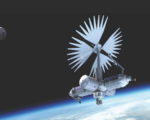
With abundant solar energy and natural cooling in the vacuum of orbit, space-based computing has the potential to extend the limits of what is physically possible on Earth. Terafab’s implicit alignment with this vision suggests that the next evolution of AI infrastructure may not be confined to national borders or even to the planet itself.
If realised, this could mark a transition from cloud computing to a new paradigm of orbital computing, where intelligence is generated and distributed at a planetary scale.
Robotics as the economic bridge
Alongside this, robotics emerges as the critical bridge between digital intelligence and real-world impact. AI systems, no matter how advanced, remain abstract until they can act in the physical world.
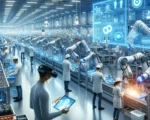
The integration of specialised chips designed for robotics platforms, whether humanoid systems or autonomous vehicles, creates a powerful feedback loop. Advances in hardware enable more capable AI, which in turn drives more sophisticated robotics, ultimately translating into tangible economic output.
In this model, robotics is not merely an application of AI, it is the mechanism through which AI reshapes industries, labour markets and productivity itself.
Execution risk, strategic inevitability
None of this diminishes the challenges ahead. Building a leading-edge semiconductor facility at the scale envisioned for Terafab remains one of the most complex engineering feats imaginable. The capital intensity, technical expertise and operational discipline required are immense, and even established industry leaders face significant hurdles. Scepticism around execution is therefore justified.
Yet focusing solely on feasibility risks overlooking the larger trajectory. Whether or not Terafab delivers in its current form, the direction it points toward is already taking shape. AI companies are seeking greater control over their silicon. Robotics is demanding increasingly specialised compute. Space is re-emerging as a viable extension of digital infrastructure. The convergence is underway.
What this means for the world
For businesses and governments, Terafab is a wake-up call. Competitiveness in the coming decade will not be defined by software capabilities alone, but by the ability to orchestrate entire stacks that span silicon, systems and, increasingly, space.
For APAC, where manufacturing strength has often been decoupled from platform ownership, the challenge is particularly acute. The region must decide whether it will remain a participant in global supply chains or evolve into a shaper of next-generation compute infrastructure.
The broader economic implications are equally significant. If compute becomes more abundant, potentially even decoupled from terrestrial constraints, the boundaries that define today’s digital economy begin to shift. The cost of intelligence could fall, unlocking new forms of automation and productivity that are difficult to fully anticipate.
A new industrial era takes shape
In this light, Terafab is less a standalone project than a marker of transition. It reframes deep tech not as a collection of discrete innovations, but as an integrated system operating at unprecedented scale.
AI, robotics and space are no longer separate frontiers. They are converging into a single, interdependent architecture that will define the next industrial era.
Musk’s vision may be ambitious to the point of improbability. But it captures a truth that is becoming increasingly difficult to ignore. The future will not simply be powered by software. It will be built through the integration of compute, machines and infrastructure, extending from the factory floor to orbit.
Terafab, in that sense, is not just a moonshot. It is a glimpse of the system that may define what comes next.